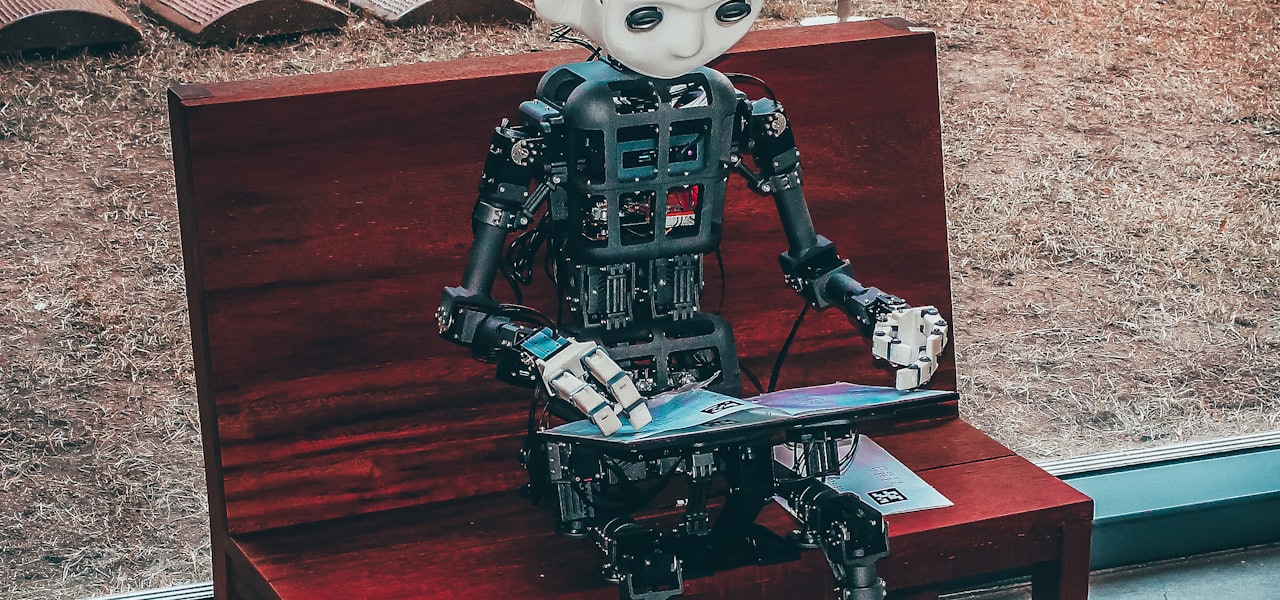
The AI effect is a phenomenon in which advances in artificial intelligence lead to a redefinition of what is considered intelligence, such that capabilities achieved by AI systems are no longer regarded as examples of "real" intelligence. The concept has been used to describe both a cognitive tendency and a sociotechnical pattern, in which successful AI techniques are reclassified as routine computation or absorbed into other domains. Historian Pamela McCorduck described this as a recurring feature of AI research, noting in her 2004 book Machines Who Think that once a problem is solved, it is no longer considered evidence of intelligence. Researcher Rodney Brooks similarly observed in 2002 that once systems are understood, they are often regarded as "just computation". == Definition == The AI effect refers to a shift in how intelligence is defined as machines acquire new capabilities. Tasks such as playing chess, recognizing speech, or interpreting images were historically considered indicators of intelligence, but after successful automation they are often reclassified as routine computation. McCorduck described this as an "odd paradox", in which successful AI systems are assimilated into other domains, leaving AI researchers to focus on unsolved problems. The phenomenon is often interpreted as an instance of moving the goalposts. A commonly cited formulation is Tesler's theorem, often expressed as "AI is whatever hasn't been done yet". When problems are not fully formalised, they may be described using models involving human computation, such as human-assisted Turing machines. == Historical examples == === Game playing === Early AI systems capable of playing games such as checkers and chess were initially regarded as demonstrations of machine intelligence. As these systems improved and became better understood, their achievements were often reinterpreted as examples of computation rather than intelligence. The victory of IBM's Deep Blue over Garry Kasparov in 1997 is a frequently cited example. Critics argued that the system relied on brute-force methods rather than genuine understanding. === Pattern recognition === Technologies such as optical character recognition and speech recognition were once considered core problems in artificial intelligence. As these systems became reliable and widely deployed, they were increasingly treated as standard engineering solutions. === Integration into applications === Many techniques originally developed within AI research have been incorporated into broader technological systems, including marketing, automation, and software applications. Michael Swaine reported in 2007 that AI advances are often presented as developments in other fields. Marvin Minsky observed that successful AI innovations often evolve into separate disciplines. Nick Bostrom noted in 2006 that widely adopted technologies are often no longer labeled as AI. == Contemporary discussion == The AI effect continues to be discussed in the context of recent advances in machine learning, particularly large language models and other generative AI systems. As these systems have become more widely used, some researchers and commentators have noted that their capabilities are frequently described as statistical or mechanical once understood, rather than as intelligence. A 2016 survey of artificial intelligence also noted that AI systems are increasingly embedded in everyday applications, reinforcing earlier observations that successful AI technologies tend to become normalized and no longer identified as AI. At the same time, the widespread commercial use of artificial intelligence has led to greater visibility of the field, contrasting with earlier periods in which AI techniques were often present but unacknowledged. == Interpretations == === Cognitive bias === Some authors describe the AI effect as a cognitive bias in which expectations of intelligence shift as machines achieve new capabilities. === Sociotechnical perspective === Another interpretation emphasizes how technologies are reclassified over time as they become widespread and commercially successful. === Philosophical debate === Some philosophers argue that reclassification reflects genuine conceptual distinctions rather than bias. == Historical context == During periods such as the AI winter, researchers sometimes avoided the term "artificial intelligence" due to negative perceptions. In the 21st century, however, the term "AI" has become widely used in public discourse and marketing. == Broader implications == The AI effect has been linked to broader questions about human uniqueness and the nature of intelligence. Michael Kearns suggested that people may seek to preserve a special role for humans. Similar patterns have been observed in studies of animal cognition. Herbert A. Simon noted that artificial intelligence can provoke strong emotional reactions.
Per-pixel lighting
In computer graphics, per-pixel lighting refers to any technique for lighting an image or scene that calculates illumination for each pixel on a rendered image. This is in contrast to other popular methods of lighting such as vertex lighting, which calculates illumination at each vertex of a 3D model and then interpolates the resulting values over the model's faces to calculate the final per-pixel color values. Per-pixel lighting is commonly used with techniques, such as blending, alpha blending, alpha to coverage, anti-aliasing, texture filtering, clipping, hidden-surface determination, Z-buffering, stencil buffering, shading, mipmapping, normal mapping, bump mapping, displacement mapping, parallax mapping, shadow mapping, specular mapping, shadow volumes, high-dynamic-range rendering, ambient occlusion (screen space ambient occlusion, screen space directional occlusion, ray-traced ambient occlusion), ray tracing, global illumination, and tessellation. Each of these techniques provides some additional data about the surface being lit or the scene and light sources that contributes to the final look and feel of the surface. Most modern video game engines implement lighting using per-pixel techniques instead of vertex lighting to achieve increased detail and realism. The id Tech 4 engine, used to develop such games as Brink and Doom 3, was one of the first game engines to implement a completely per-pixel shading engine. All versions of the CryENGINE, Frostbite Engine, and Unreal Engine, among others, also implement per-pixel shading techniques. Deferred shading is a recent development in per-pixel lighting notable for its use in the Frostbite Engine and Battlefield 3. Deferred shading techniques are capable of rendering potentially large numbers of small lights inexpensively (other per-pixel lighting approaches require full-screen calculations for each light in a scene, regardless of size). == History == While only recently have personal computers and video hardware become powerful enough to perform full per-pixel shading in real-time applications such as games, many of the core concepts used in per-pixel lighting models have existed for decades. Frank Crow published a paper describing the theory of shadow volumes in 1977. This technique uses the stencil buffer to specify areas of the screen that correspond to surfaces that lie in a "shadow volume", or a shape representing a volume of space eclipsed from a light source by some object. These shadowed areas are typically shaded after the scene is rendered to buffers by storing shadowed areas with the stencil buffer. Jim Blinn first introduced the idea of normal mapping in a 1978 SIGGRAPH paper. Blinn pointed out that the earlier idea of unlit texture mapping proposed by Edwin Catmull was unrealistic for simulating rough surfaces. Instead of mapping a texture onto an object to simulate roughness, Blinn proposed a method of calculating the degree of lighting a point on a surface should receive based on an established "perturbation" of the normals across the surface. == Hardware rendering == Real-time applications, such as video games, usually implement per-pixel lighting through the use of pixel shaders, allowing the GPU hardware to process the effect. The scene to be rendered is first rasterized onto a number of buffers storing different types of data to be used in rendering the scene, such as depth, normal direction, and diffuse color. Then, the data is passed into a shader and used to compute the final appearance of the scene, pixel-by-pixel. Deferred shading is a per-pixel shading technique that has recently become feasible for games. With deferred shading, a "g-buffer" is used to store all terms needed to shade a final scene on the pixel level. The format of this data varies from application to application depending on the desired effect, and can include normal data, positional data, specular data, diffuse data, emissive maps and albedo, among others. Using multiple render targets, all of this data can be rendered to the g-buffer with a single pass, and a shader can calculate the final color of each pixel based on the data from the g-buffer in a final "deferred pass". Because deferred shading assumes only one visible fragment per pixel sample, transparent objects are generally handled in a separate forward pass. == Software rendering == Per-pixel lighting is also performed in software on many high-end commercial rendering applications which typically do not render at interactive framerates. This is called offline rendering or software rendering. NVidia's mental ray rendering software, which is integrated with such suites as Autodesk's Softimage is a well-known example.
Death and the Internet
A recent extension to the cultural relationship with death is the increasing number of people who die having created a large amount of digital content, such as social media profiles, that will remain after death. This may result in concern and confusion, because of automated features of dormant accounts (e.g. birthday reminders), uncertainty of the deceased's preferences that profiles be deleted or left as a memorial, and whether information that may violate the deceased's privacy (such as email or browser history) should be made accessible to family. Issues with how this information is sensitively dealt with are further complicated as it may belong to the service provider (not the deceased) and many do not have clear policies on what happens to the accounts of deceased users. While some sites, including Facebook and X (formerly Twitter), have policies related to death, others remain dormant until if applicable, deleted due to inactivity or transferred to family or friends. The FADA (Fiduciary Access to Digital Assets Act) was set in place to make it possible to transfer digital possessions legally. More broadly, the heavy increase in social media use is affecting cultural practices surrounding death. "Virtual funerals" and other forms of previously physical memorabilia are being introduced into the digital world, complete with public details of a person's life and death. == E-mail == Gmail and Hotmail allow the email accounts of the deceased to be accessed provided certain requirements are met. Yahoo! Mail will not provide access, citing the No Right of Survivorship and Non-Transferability clause in the Yahoo! terms of service. In 2005, Yahoo! was ordered by the Probate Court of Oakland County, Michigan, to release emails of deceased US Marine Justin Ellsworth to his father, John Ellsworth. == By website == === Facebook === ==== Policies ==== In its early days, Facebook used to delete profiles of dead people, but does not anymore. In October 2009, the company introduced "memorial pages" in response to multiple user requests related to the 2007 Virginia Tech shooting. After receiving a proof of death via a special form, the profile would be converted into a tribute page with minimal personal details, where friends and family members could share their grief. In February 2015, Facebook allowed users to appoint a friend or family member as a "legacy contact" with the rights to manage their page after death. It also gave Facebook users an option to have their account permanently deleted when they die. As of January 2019, all 3 options were active. ==== Controversies ==== In 2013, BuzzFeed criticized Facebook for the lack of control over memorialization that resulted in a "Facebook death" prank aimed at locking users out of their own accounts. In 2017, Reuters reported that a German court rejected a mother's demand to access her deceased daughter's memorialized account stating that the right to private telecommunications outweighed the right to inheritance. In July 2018, Dubai's DIFC Courts ruling clarified that Facebook, Twitter and other social media accounts should be bequeathed in legally binding will. Social media networks have also been criticized for not responding to relatives' requests to alter information on memorialized accounts. Another criticism is that Facebook users often are unaware that their content is ultimately owned not by them, but by Facebook. === Dropbox === ==== Policies ==== Dropbox determines inactive accounts by looking at sign-ins, file shares, and file activity over the previous 12 months. Once an account is determined inactive, Dropbox deletes the files on the account. To request access to the account of a deceased person, heirs are required to send appropriate documents by physical mail. === Google === ==== Policies ==== In April 2013, Google announced the creation of the 'Inactive Account Manager', which allows users of Google services to set up a process in which ownership and control of inactive accounts is transferred to a delegated user. Google also allows users to submit a range of requests regarding accounts belonging to deceased users. Google works with immediate family members and representatives to close online accounts in some cases once a user is known to be deceased, and in certain circumstances may also provide content from a deceased user's account. === X (formerly Twitter) === ==== Policies ==== Until 2010, Twitter (launched in July 2006) did not have a policy on handling deceased user accounts, and simply deleted timelines of deceased users. In August 2010, Twitter allowed memorialization of accounts upon request from family members, and also provided them with an option of either deleting the account or obtaining a permanent backup of the deceased user's public tweets. In 2014, Twitter updated its policy to include an option to delete deceased user photographs. This policy was implemented after multiple Twitter trolls sent Zelda Williams, daughter of Robin Williams, photoshopped images of her father. As of January 2019, the only option that Twitter offered for the accounts of dead people was account deactivation. Previously published content is not removed. To deactivate an account Twitter requires an immediate family member to present a copy of their ID and a death certificate of the deceased. Twitter specified that it does not provide account access to anyone, but does allow people having account login information to continue posting. A prominent example is Roger Ebert's account maintained by his wife Chaz. ==== Controversies ==== In 2012, The Next Web columnist Martin Bryant noticed that since Twitter, unlike Facebook, did not have a "one account per real person" emphasis, memorializing accounts presented a difficulty to the service. He also criticized the service for the lack of control over hacking of such accounts and disapproved the practice of passing dead people's usernames to new owners after a certain period of inactivity. In 2013, Variety ran a feature about Cory Monteith's Twitter account that had 1.5 million followers at the moment on his death and gained almost 1 million new followers afterwards. Monteith's fans also launched #DontDeleteCorysTwitter campaign. As of February 2019, the celebrity's account had 1.63 million followers. Various media reported awkward incidents related to automatic posting and account hacking. === iTunes === ==== Policies ==== iCloud and iTunes accounts are "non transferable" since the content is not owned — users only have a licence to access it. === Wikipedia === Users who have made at least several hundred edits or are otherwise known for substantial contributions to Wikipedia can be noted at a central memorial page. Wikipedia user pages are ordinarily fully edit-protected after the user has died, to prevent vandalism. === YouTube === YouTube grants access to accounts of deceased persons under certain conditions. It is one of the data options that one can select to give access to a trusted contact with Google's Inactive Account Manager. === Instagram === ==== Policies ==== As of the COVID-19 pandemic, Instagram has notified its users of a delay in time of reviewing reports of deceased users due to the limited staff the pandemic has caused. Users that submit a report on a deceased user on Instagram can either memorialize the account or remove it from Instagram's platform. Through memorializing the account, Instagram secures and protects a platform of a deceased user, but per their policy, they do not supply any of the login credentials to the account. For both memorializing or removing a deceased users account, a verified user needs to submit a tangible document that shows proof of death of the user. However, to fully remove an account, the user must be a close or direct family member to the deceased person, and show proof of credibility as well. === Microsoft === ==== Policies ==== Per Microsoft's policies, they do not supply any of the login credentials to a deceased user's Microsoft account. A user does not have to contact or notify Microsoft of the deceased user, as the related user is able to close the account themselves. At default, Microsoft removes accounts after 2 years of inactivity. If the user does not have access to the deceased user's account, Microsoft recommends that the user deletes all bank accounts linked to that of the deceased to ensure no subscriptions are still going through. If the user wants to request to gain access to the deceased user's account, a court order or a subpoena has to be provided to Microsoft, but does not guarantee access to the deceased user's account. For users that live in Germany, more documentation is needed to gain access of a deceased user's account, including the deceased user's death certificate, a form of ID, and a documentation of consent from the deceased. The requesting user needs to provide a form of ID as well. == Digital inheritance == Digital inheritance is the process of handing over
IBM Retail Store Systems
This article describes IBM point of sale equipment from 1973 with the introduction of the IBM 3650 till 1986 with the introduction of the IBM 4680. IBM continued to announced new retail products until the sale of the IBM Retail Store Solutions business to Toshiba TEC, announced on 17 April 17 2012. == Background == IBM began selling retail point of sale systems starting in 1973 with the IBM 3650 Retail Store System aimed at department and chain stores and the IBM 3660 Supermarket System designed for supermarkets. The IBM 3650 was announced alongside other IBM vertical industry systems such as the IBM 3600 Finance Communication System, and the IBM 3790 communications system, the combination of which IBM described as a "revolution in terminal based systems". All of these systems relied on a significant number of developments across IBM: New chips: Large Scale Integration allowed advanced Field Effect Transistor logic chips that packed far more transistors onto a new metalized one-inch square ceramic substrate Gas panels: Developed as an alternative to cathode ray tubes, the neon argon gas panel provided clear and flicker-free images. Modem communications: Synchronous Data Link Control provided lower-cost communications over telephone lines New disks: The "Gulliver" disk file that supplied a hard drive smaller than three cubic feet and also the "Igar" diskette drive Smaller printers: A disk printer system called "spica" that used a rotating disk print element with engraved print elements that are struck by a single hammer as the disk rotates Belt printers: A new system, known as "Lynx," using a removable belt that was significantly cheaper, quieter and simpler than earlier chain printers Keyboards: New keyboard technology called "Calico" that could build a wide variety of keyboards using common manufacturing facilities Power supplies: Transistorised Switching Regulators or TsRs: compact power supplies that are one third to one-fourth the size of previous generations === Store Loop (SLOOP) architecture === The 36xx retail terminals are connected to the store controller via a loop also called a Store Loop, similar to that used by the IBM 3600 Finance System. If a terminal detects an error, it runs a self-diagnosis routine, displays an error code to the operator, and uses bypass circuitry to remove itself from the loop and allow the loop to continue operating. If the loop fails, the most downstream terminal transmits an error code to the controller. Intermittent errors are written to disk on the store controller. === Supplies Manufacturing === While IBM's Data Processing Division created the retail store systems, it's Information Record Division (IRD) also saw signifiant opportunity in manufacturing supplies for retail systems. As an example in their Dayton NJ plant they used a high-speed Webtron press to create up to 1 million magnet merchandise tags per shift. == IBM 3650 Retail Store System == The 3650 System is a family of products designed to computerise a retail store, both at the point of sale and for back office store management functions. It includes a method to generate encoded tickets for merchandise, rather than use the Universal Product Code (UPC). The key devices for the system were as follows: === Shop Floor === ==== 3653 Point of Sale Terminal ==== Designed for the store floor, it is a loop attached device with: a wire matrix printer with 3 stations: cash receipt, sales-check and transaction journal. a keyboard with 10 numeric keys and 19 function keys an 8 digit display and description lights. in addition to the 8 digits it also displays the following characters: "$", "." and "-" operator guidance panel with 20 backlit captions status indicators a cash drawer a check verification station. Options include a wand magnet label reader with a 4 foot flexible cord, and locks for the journal tape and the till cover. The terminal effectively loads its software remotely from the 3651 over the loop, which IBM calls an IML (initial microcode load). It can also be IMLed locally using a tape cassette recorder. IBM later offered a choice of OEM Wand Attachments that could be ordered by RPQ that could use OCR or scan UPCs, instead of a wand magnet label reader. Only one wand could be attached to a specific 3653. There are two models: Model 1, which is not programmable. Was announced 10 August 1973. Model P1, which is customer programmable. Has 36 KB of storage expandable to 60 KB. Was announced 13 October 1978. === Back office equipment === ==== 3651 Store Controller ==== Controls data flow inside either a single store or multiple stores and sends retail transactions to a mainframe using a modem. For point of sale it performed functions such as: Automatic price lookup from a master price file Automatic distribution of net sales by up to 54 departments Automatic application of applicable discounts and sales taxes Automatic control of food stamp maximums Check authorization facilities For back office it also helped report preparation such as: store summary individual cashier performance store office reconciliation sales by up to 54 departments Current inquiries for department sales; cashier performance & cash position; store cash position. Inquiries and changes to the master price records and operator authorization control records. Setting the time and date for the internal clock. Running the customer checkouts in training mode. Printing of messages received from the host mainframe Entry of messages to send to the host mainframe Reporting of customer stock returns Updating the system with data received from the mainframe Preparing shelf Labels Basic features include: Each loop attaches up to 63 or 64 terminals depending on traffic volumes and desired response times Has an error and operator panel. There were many models including: A25 Has a 5 MB internal disk. Has 60K of memory expandable to 76KB. Supports one store loop. Attaches to 3275, 3653 and 3663. Announced 19 May 1978, withdrawn 19 February 1981 B25 Same as a A25 with a 9.2 MB internal disk. Announced 19 May 1978 C25 Announced 15 May 1981, withdrawn 15 December 1987 A50 Has a 5 MB internal disk. Announced 5 May 1975. Announced 10 August 1973, withdrawn 15 December 1987 B50 Same as B50 with a 9.2 MB internal disk. Announced 5 May 1975, withdrawn 15 December 1987 A60 Has a 5 MB internal disk. Has an integrated 3669. Attaches up to 24 3663 terminals. Announced 11 October 1973, withdrawn 15 December 1987 B60 Same as A60 with a 9.3 MB internal disk. Announced 17 November 1975, withdrawn 15 December 1987 A75 Has 5 MB internal disk. Has 60K of memory expandable to 124KB. Supports one to three store loops. Attaches to 3275, 3653, 3657, 3784 and 3663 terminals. Announced 19 May 1978 B75 Same as A75 with 9.3 MB internal disk. Announced 19 May 1978, withdrawn 15 December 1987 C75 Same as A75 with 18.6 MB internal disk. Announced 19 May 1978, withdrawn 15 December 1987 D75 Same as A75 with 27.9 MB internal disk. Announced 19 May 1978, withdrawn 15 December 1987 There were also two additional models that could be used instead of the 3651: 7480 Model 1: Has a 18.6 MB internal disk 7480 Model 2: Has a 27.9 MB internal disk ==== 3872 Modem ==== Used to attach to a 3659 for remote loops. Each 3872 can attach three 3659s. ==== 3659 Remote Communication Unit ==== Connected to an IBM 3872 and provides a remote loop for up to 64 point of sale terminals. Announced 10 August 1973, withdrawn 15 December 1987 (Model 2, announced 17 March 1976, withdrawn 20 December 1982) Intended to be used in a back office location like the store manager's office or the data entry office ==== 3275-3 Display Station ==== It is a loop attached display terminal with printer attachment hardware ==== 3784 Line Printer ==== A belt printer for higher-volume end-of-day reporting. The maximum print speed is 155 Ipm using a 48 character set. ==== 3657 Ticket Unit ==== Used to print tickets and encoded labels to attach to store merchandise. It is a loop attached device. It prints the following: 1" by 1" adhesive backed labels with up to 11 characters at 500 tickets per minute. IBM sold these in rolls of 9000 1" x 2" tickets with up to 42 encoded characters and two lines of print of up to 21 characters at 250 tickets per minute. IBM sold these in rolls of 2800 1" x 3" tickets with up to 79 encoded characters and two lines of print of up to 32 characters at 167 tickets per minute. IBM sold these in rolls of 1900 It can also batch read the tickets for validation, separating good tickets from bad ones into two cartridges. Announced 10 August 1973, withdrawn 15 December 1987 ==== 7481 Data Storage Unit ==== This optional unit is used to record transaction data and initialize terminals if the store controller is not available. It uses a built in tape drive to store this data. === Early deployments === The first customer installation of a 3650 was at a Dillard's department store in Little Rock, Arkansas, in late 1974. They placed arou
Key & See
Key & See is a variation of the TV Key service that forms part of the open, standards-based interactive TV services platform provided by Miniweb Interactive. Key & See allows viewers to access the interactive TV content made available by broadcasters and channel owners while leaving quarter of their screen tuned to the programme they are already watching Like TV Key, Key & See can be used with interactive TV services on UK satellite TV provider Sky Digital (BSkyB) Key & See works in the same way as a TV Key but the numeric shortcut code is associated with a broadcaster and a particular TV channel or programme. Miniweb Interactive offers commercial brands and broadcasters the chance to utilise TV Key and Key & See technology as part of its interactive TV services platform
Vatican News App
The Vatican News App is an official mobile application software issued by the Vatican's Dicastery for Communication. Formerly titled The Pope App, the app was launched on January 23, 2013, under the auspices of the Pontifical Council for Social Communications, a now-defunct dicastery that was merged into the Secretariat (now Dicastery) for Communication in March 2016. Initially, The Pope App was available only on iOS devices, but became available for Android phones at the end of February 2013. The app is available for download on iOS and Android in five languages: English, French, Italian, Portuguese and Spanish. It was originally promoted as an application with focus on the figure of the Pope which made it possible to follow the Pope's events while they are taking place. Alerts notified the followers by informing and offering access to "official papal-related content in a variety of formats". The app also enabled its users to see areas of the Vatican through webcams allocated throughout St. Peter's Square in Rome that broadcast images. In early 2018, The Pope App was relaunched as the Vatican News App, accompanied by a redesign that eliminated many of the previous version's features, reducing the app to a more conventional news service, with increased emphasis on news from the Vatican and the worldwide Catholic Church and less focus on the day-to-day activities of the Pope.
Conversion path
A conversion path is a description of the steps taken by a user of a website towards a desired end from the standpoint of the website operator or marketer. The typical conversion path begins with a user arriving at a landing page or a product page and proceeding through a series of page transitions until reaching a final state, either positive (e.g. purchase) or negative (e.g. abandoned session). In practice, the study of the dynamics of this process by the interested party has evolved into a sophisticated field, where various statistical methods are being applied to the optimization of outcomes. This includes real-time adjustment of presented content, in which a website operator tries to provide deliberate incentives to increase the odds of conversion based on various sources of information, including demographic traits, search history, and browsing events. In practice, this reflects in different content presented to users arriving from online advertising versus search engines, and similarly, different content is presented depending on their demographic segments. The fundamental metric describing this process in the aggregate is known as conversion rate.